Robot vacuum losing suction? Isolate the filter, bin, seal, and air path
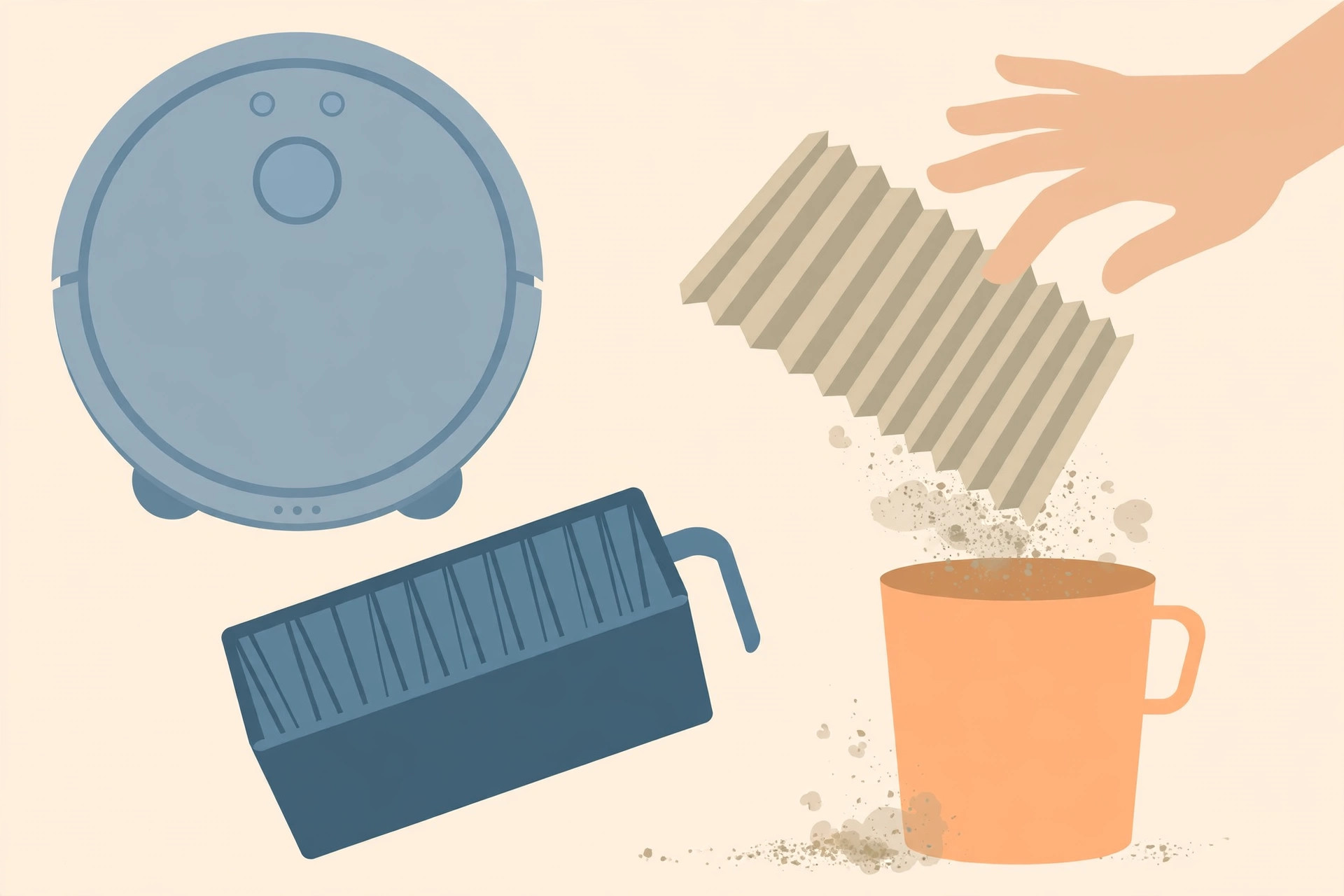
A robot that used to pick up crumbs and now leaves them behind is rarely a dead suction motor — it's a maintenance backlog. Suction dies when the air path chokes: a clogged filter, a full dustbin, a leaking dustbin seal, or a blocked intake channel. The trick is fixing them in the right order so you know which one was actually the culprit. Work the sequence below, testing after each step.
Step 1: Empty and clear the dustbin (5 minutes)
Remove the dustbin after a cleaning run and empty it fully — not just the loose top layer. A half-full dustbin can cut suction by 15 to 25 percent because the restricted air space limits airflow. Tap the bin gently over the trash, then check the bin's intake opening for a clump of pet hair or a chunk of debris wedged across the channel. Rinse the bin itself with warm water if it's heavily soiled, dry it completely before reinstalling, and test: run the robot for two minutes on a hard floor. If pickup is back, the bin was the whole problem.
Step 2: The filter — identify, clean, and know when it's spent (10 minutes)
The filter is the number-one suction killer. A filter that hasn't been cleaned or replaced traps fine particles that choke airflow — and a clogged HEPA filter can cut effective suction by up to 50 percent. Open the dustbin, pull the filter from its housing, and tap it firmly over a trash can to dislodge loose dust. For washable filters, rinse under lukewarm water until it runs clear — never soap or chemicals, which damage the filter material — and then air-dry it completely before reinstalling. A filter that goes back in damp grows mold and cuts airflow worse than dust does.
The filter is spent, not dirty, when tapping and washing no longer restore it: tears, holes, thinning material, or frayed edges mean replacement is due. Plan on weekly filter cleaning and a replacement every two to six months — closer to two if you have pets.
Washable vs disposable: read your own filter
This is where most owners damage their filters. There are two types, and they are not cared for the same way:
| Washable / reusable filter | Disposable filter (usually HEPA) | |
|---|---|---|
| Cleaning | Tap over trash, then rinse under lukewarm water until clear; air-dry 100% before reinstalling | Tap over trash only — never rinse |
| What ruins it | Soap or chemicals; reinstalling while damp (mold) | Water — only rinse a filter your manual marks washable |
| Replace when | Material thins, tears, or cleaning stops restoring airflow | Every 2–6 months (about 2–3 with pets), or at any visible damage |
Your manual names which type you have — check it before the filter sees water for the first time. If in doubt, treat it as disposable: tapping is safe for both kinds, rinsing is not.
Step 3: Check the dustbin seal and the air channel (5 minutes)
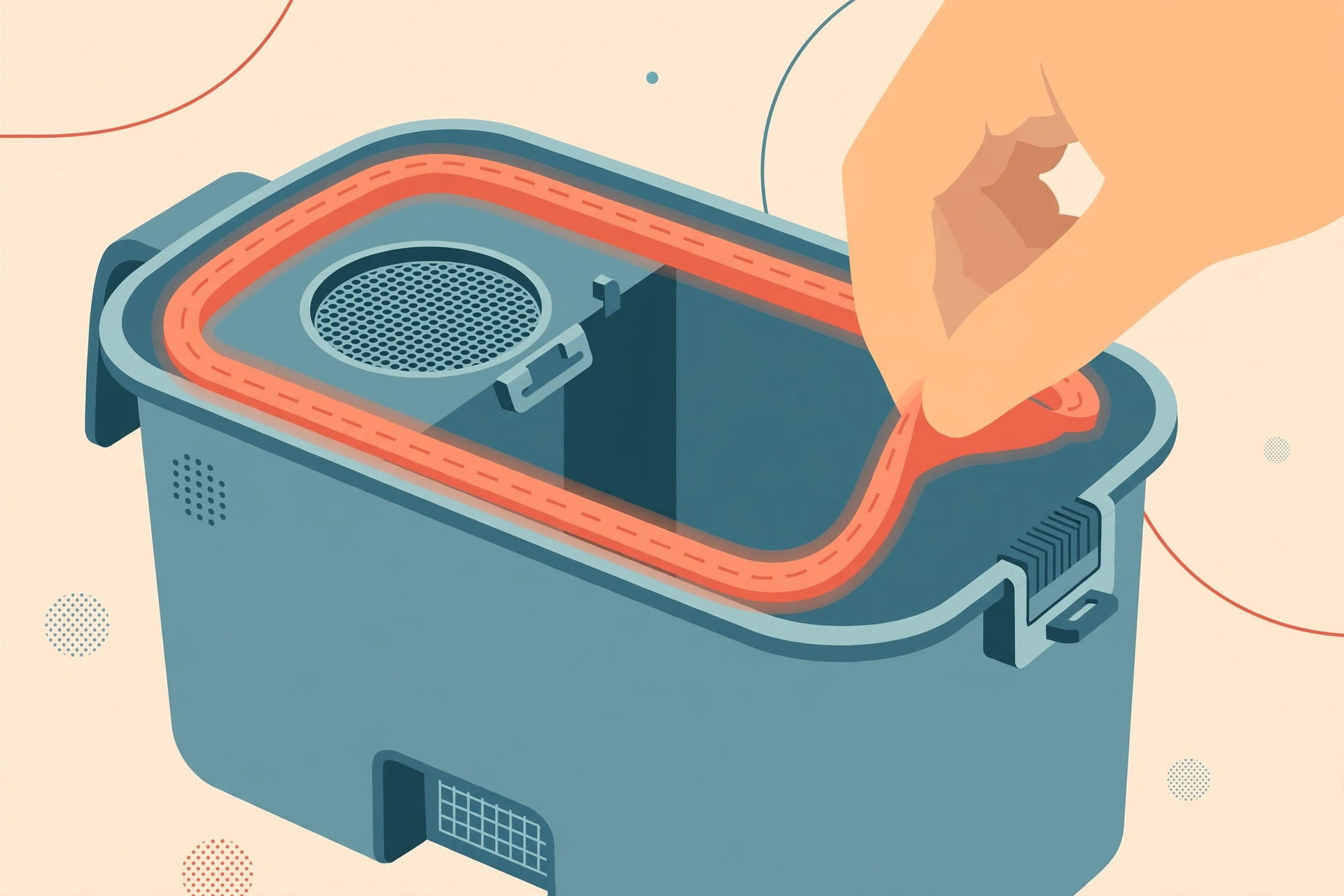
If suction is still weak after the bin and filter, look for air leaks. A robot can lose suction through cracked housings and worn seals even when every part is clean. Inspect the dustbin's rubber gasket: it should sit flat and springy all the way around. A flattened, cracked, or missing gasket lets air bypass the filter entirely. Refit it if it's displaced; replace the bin or gasket if it's damaged. Then trace the air channel from the brush housing to the dustbin and clear any blockage with a small brush or a puff of compressed air — a wad of hair lodged mid-channel behaves exactly like a dead motor.
Step 4: Clear the brush roll and reset the baseline (5 minutes)
Hair wrapped around the brush roll doesn't clog the air path directly, but it forces the motor to work harder and drags down cleaning efficiency. Cut hair and thread off the main and side brushes with scissors, clean the roller ends, and reinstall everything. Now re-run the two-minute hard-floor test. Empty bin, clean dry filter, seated gasket, clear channel, free brush — that stack restores suction to near-original levels in the vast majority of cases.
What success looks like
The robot picks up visible crumbs and fine dust on a hard floor in a single pass, the dustbin shows an even coating of fine dust on the filter (proof air is flowing), and the unit doesn't sound noticeably louder than when it was new — louder-than-normal operation with weak pickup usually means airflow is still restricted somewhere. Keep the weekly cadence — bin emptied, filter tapped, brushes checked — and suction stops being a recurring mystery.
FAQ
I cleaned everything and suction is still weak. Is the motor dead?
Not yet. Recheck the dustbin seal and the air channel — leaks and mid-channel
blockages are the usual survivors after a full clean. Only after a seated
gasket, a clear channel, and a known-good filter should you suspect the motor.
How do I know my filter is washable?
Check your manual — it names the type. As a safe default: tap every filter
and rinse only one your manual marks as washable or reusable.
The robot smells musty. Related?
Usually, yes — a saturated or moldy filter. Clean or replace it, and make sure
any washed filter air-dries completely before it goes back in.